

Your data stays in Canada. Every access leaves a trace.
iYan is built as a sovereign AI platform: hosted in Canada, encrypted from the browser to the disk, anonymised before any model sees it, and auditable line by line. Security is the starting point of the architecture, not a layer added before an audit.
Canada
hosting of every workspace
0
data sold or used for training
100 %
of actions in the audit journal
7
layers of defence
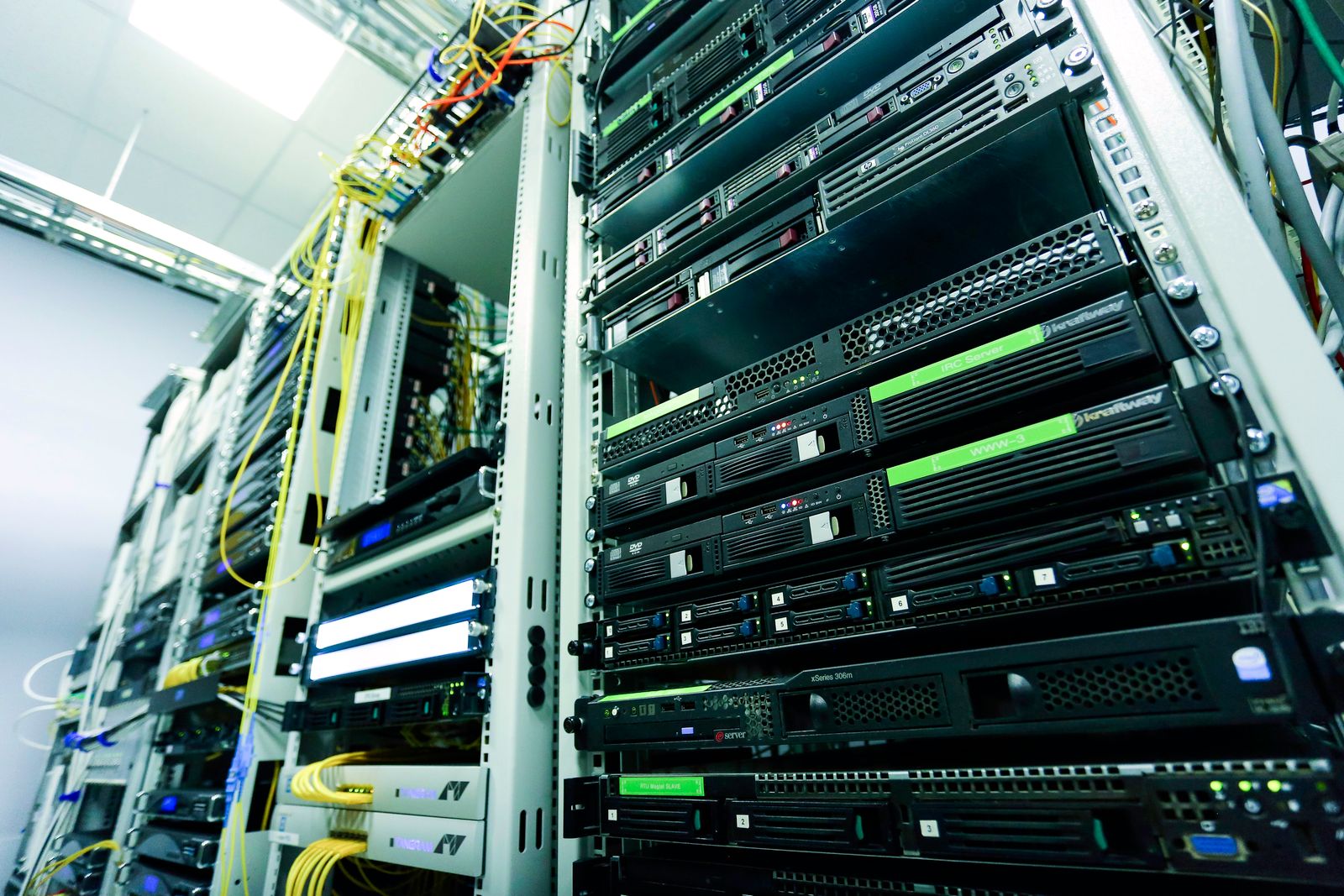
What consumer AI does with your data.
Public chatbots are convenient, and that convenience is the problem: nothing stays inside your organization.
Data leaves the country
A prompt pasted in a public assistant is processed abroad, under foreign law, often with a right of reuse for training.
No traceability
No usable log, no record of who asked what and when. A privacy request or an incident cannot be documented.
Personal information exposed
Customer names, files, contracts and salaries end up in third-party systems you do not control and cannot erase.
Tools that multiply
One assistant per team, one subscription per use case: five places where your data lives, and five security reviews to do.
Sovereignty, integration, governance.
What a security team expects from an AI platform, and how iYan answers each point.
Sovereignty
Your data, your territory.
Workspaces are hosted in Canada; organizations run iYan on their own servers or in hybrid mode. Models, knowledge base and keys stay where you decide, and nothing is ever used to train a model.
- Hosting in Canada or on your servers
- Local or private models for sensitive work
- Encryption keys you can hold yourself
- No training on your data, ever
Integration
Inside your information system, not beside it.
iYan plugs into what you already run: your identity provider, your mailboxes and drives, your tools. Every connector acts under the identity of the person using it, and the API speaks the format your developers already know.
- SSO and 2-step verification
- Connectors under each user’s own identity
- OpenAI-compatible API and agent API
- Audit exports for your auditor or your SIEM
Governance
Rules set once, applied everywhere.
Administrators decide which models are allowed, whether masking can be turned off, how long the journal is kept and what each user may spend. Every request, tool call and admin action lands in a hash-chained journal.
- Allowed models per organization
- Masking and retention set by the administrator
- Quotas and budgets per user
- Tamper-evident, exportable audit journal
What sits between your users and the models.
A single platform owns the interaction layer: identity, permissions, anonymisation and audit happen before any model is called.
Seven layers between a request and a model.
Each layer is independent: a weakness in one does not open the others.
An authenticated person sends a request from the web app, the mobile app or the agent API.
- 11:27:42.118 #00000061 ←61c886b0 ▶ Request User ok
- ▌

Hardened the way we ship.
Every release runs the OWASP Top 10 suites for web applications and for LLM applications, static analysis of the code, a scan of every dependency and of every container image. A high-severity finding blocks the release.
Backups are encrypted before they leave the server, and in the HIPAA mode no plain copy is ever written. Secrets live in a secrets manager under a master key; service accounts carry short-lived tokens instead of passwords.
The security file we hand to your team under NDA describes the architecture, the controls, the incident process and the results of the last scans. Pentest reports are added as they are produced.
The frameworks we work against.
Honest status, as of today.
Law 25 (Québec)
In forceHosting in Canada, person in charge of personal information, incident register and notifications, rights of access and erasure.
GDPR
In forceErasure, portability, processing register, lawful basis documented, data processing agreement on request.
PIPEDA (Canada)
In forceBreach reporting to the Privacy Commissioner, consent, access requests.
OWASP Top 10, web and LLM
Tested each releaseAutomated suites for injection, prompt injection, broken access control, data exposure and agentic abuse.
HIPAA mode
ActivatableA single switch for regulated deployments: mandatory 2-step verification, 15-minute idle sessions, masking by default, six-year audit retention, provider allowlist and BAA registry, encrypted backups only.
SOC 2 / ISO 27001
RoadmapControls are documented against these frameworks; the certifications themselves are not held yet. We say so rather than imply otherwise.
Need a completed security questionnaire (SIG, CAIQ or your own)? Ask for it: we answer within five business days.
iYan next to consumer AI.
The criteria your security team asks about first.
| Criterion | Public chatbot | Office suite assistant | iYan |
|---|---|---|---|
| Data hosted in Canada | |||
| Runs on your own servers | |||
| Anonymisation before the model | |||
| Tamper-evident audit journal | Partial | ||
| Choice of model, including local | |||
| Your own keys | Partial | ||
| HIPAA mode and BAA | Enterprise only | ||
| No training on your data | Opt-out |
Frequently asked questions
Where exactly is my data stored?+
iYan Cloud workspaces run on servers located in Canada. Organizations can also run the platform on their own infrastructure, or in a hybrid mode where only the model gateway is managed by us. In every case the knowledge base, the files and the keys stay in the perimeter you chose.
How is data encrypted?+
In transit with TLS 1.3. At rest, documents of the vault are encrypted chunk by chunk with AES-256-GCM under a master key kept in a secrets manager; organizations can bring their own key. Backups are encrypted before leaving the server.
Which personal information is masked, and how?+
Names, emails, phone numbers, addresses, identifiers and the entries of your own referentials (customers, employees, products) are detected and replaced by anonymous tokens before the model. The real values are restored in the answer you see. In the HIPAA mode, masking is on by default and the user reviews what was masked.
Who can access my workspace?+
Nobody but the people you invite. Administrators of an organization see usage, quotas and the audit journal, not the content of private conversations. Our staff has no standing access to customer data; interventions are logged.
What happens during an incident?+
Detection by alerts on the audit journal and monitoring, containment, notification of the persons concerned and of the Commission d'accès à l'information du Québec when required by Law 25, remediation and a written post-incident report. Every incident is recorded in a register.
Can I get documentation for my own audit?+
Yes, under NDA: architecture description, control list, security policy, the results of the latest scans and tests, the data processing agreement. Standard turnaround is five business days.
Do you hold SOC 2 or ISO 27001?+
Not yet. Our controls are mapped to those frameworks and the HIPAA mode, Law 25 and GDPR are in force today. We prefer to state it plainly than to let a badge suggest otherwise.
Need a complete security file?
We prepare a file for your IT leadership and your privacy officer: architecture, controls, compliance status, incident process.